

January is a time full of hope and excitement in relation to the garden. Seed catalogs are arriving in a steady fashion. The list of things I want to grow in the coming gardening season can really add up. Thankfully this is the time where I make sure that my growing season plans are well laid out. I used to not be a garden planner, I would know in my head what I wanted or needed to grow each season, but often I would sow more seeds than I could ever need. Having a solid garden plan in place can save you time, money and stress. Below I am sharing some things to think about when it comes to planning your garden for the growing season.
- Take Inventory of Your Seed Stock – Just as you should check your pantry before heading to the grocery store, checking what seeds you already have on hand will help you know what not to buy before placing any seed orders. This can save you money! It is helpful if you store your seeds in a reliable system that makes sense for you. I store my seeds in photo storage containers labeled with plant family name and common name. (Solanaceae, Tomatoes). I know what season each plant family can be grown in and there are often more than one type of plant for each plant family. I have multiple photo storage containers and have separated my seeds into containers based on the season they grow in. (Cool season plants in one container and other container for warm/hot season plants. I also have them for flowers and herbs.) Go through each grouping of seeds and make a list of any seeds that you are out of or low on. Add to this list any new seeds that you want to try this year. Shop for seeds based off this list from your favorite seed suppliers.
- Clean All Garden and Seed Starting Supplies – If you didn’t clean all your garden tools and seed starting supplies at the end of the season last year, now is the time to do it! It is always so much better to be able to start seeds without having to clean old dried up soil off your containers. Doing this now will allow you to purchase or source anything that needs replacing. It also gives you time to make any repairs if needed. This is also a great time to sharpen your pruners. Doing this step now ensures you will have a smoother time getting started for the season.
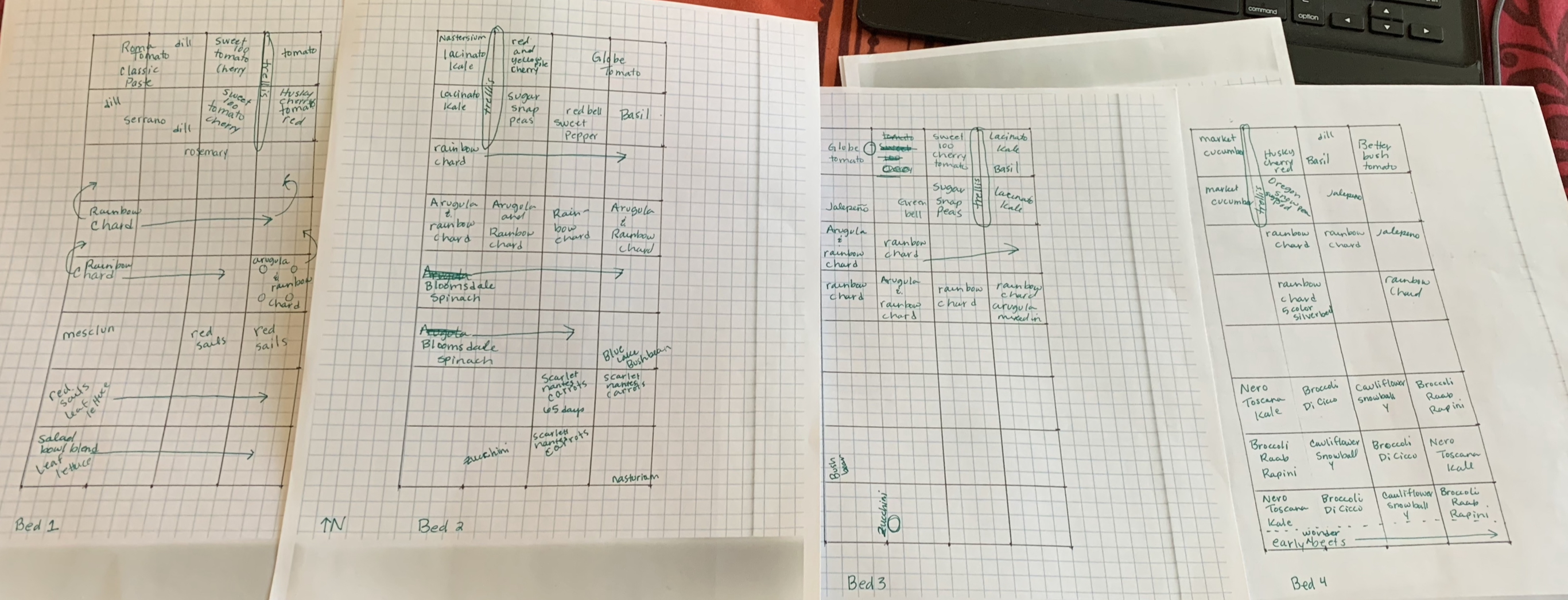
- Create a Planting Plan – Decide what you are going be growing in each garden bed. After a few season of growing in your garden your list may be locked in, but I always suggest creating a list of what you love to eat as well as anything new you want to try. I create my planting plan by using a printed template I created years ago that is scaled to mimic my raised beds. When i am ready to create my planting plans all i have to do is make a copy of the template. I like to use square foot gardening and intensive planting guidelines for laying out my plants, but you can do yours however you want as long as you make sure each plant has enough space to thrive. I have multiple plans for each bed based on each season. I add to the bottom or side of the paper any succession planting plans that I have in a chart. This should be added to your garden journal.
- Start A Garden Journal – This is possibly the most important thing you can do to ensure a successful growing season! You can add your planting plans to your garden journal in the first few pages depending on how many beds you have. (You may only have one page per season if you are growing on a smaller scale.) Add your first and last frost dates, your growing zone if you plan on growing perennials, your Persephone days, etc. This is ideally either a binder or notebook where you can add in papers easily, make notes, etc. This will come in handy all year and possibly for years to come. Create a page or section for each plant you are growing, you can use copy paper and page protector sleeves. In each section include any pertinent information that you will need/want to know. I like to include scientific names, common names, growing season, days to maturity, how many weeks before last frost to sow seeds, whether the plant likes to be directed sown or not, succession sowing timing, harvest size, possible pests and diseases, which bed(s) it has been grown in, etc. You can print pages from online sources or it can be handwritten or a mix of both. This journal is your own creation and can be highly personalized. Make sure that you have a way to either jot down notes or add new pages as needed. You can record how well something did year after year, make note of how long germination took, how much harvest you got, etc. basically and and all information you deem necessary. Add to it throughout each season, trust me I have said many times that I will remember, but at the end of the season I have forgotten what I said I would remember. Once I started keeping a journal it was a game changer, I became a better gardener.
These are just a few things to get you started on planning for a successful growing season! Remember that there are as many different ways to plan your garden as there are ways to garden, find what works for you. Knowing what seeds you need to purchase and which you don’t can save you time and money. Preparing your supplies so that they are fully ready to go when it’s time will help you get started with ease. Creating planting plans helps make sure you plant enough of what you want to grow and when. Lastly, I can’t recommend highly enough that you start a garden journal/notebook to keep track of everything. You can return to this journal over and over again throughout the season and over the coming years.
 Candice Cullen Holistic Nutritionist, Herbalist, Culinary Nutrition Expert & Garden Coach