
July in Colorado can be the kick off to hot weather for days on end. In fact, in my specific growing area July is considered a “Hot Season” within the Arc of Seasons as taught by Gardenary. Our average high is 90°F with average overnight lows sitting at 58°F. With this heat comes the need for taking steps to help the garden and plants survive the heat. Plants will stop producing and drop their blossoms if temperatures are above 85°F for more than a few days. To help combat this there are things we can do to lower soil and air temperatures.
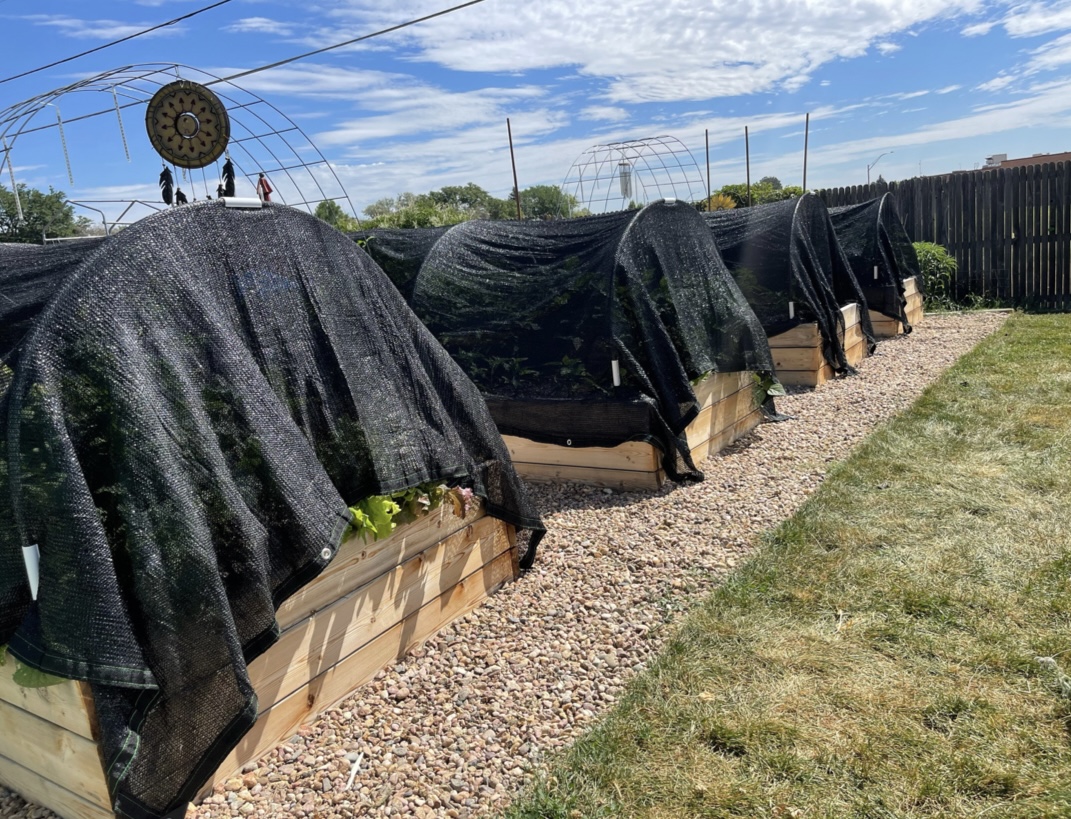
- Shade Cloth – I am a big proponent of using shade cloth to help plants in the heat. It is also beneficial because we always have the potential to have a hailstorm if the weather is just right. There are many varieties to choose from. In the summer heat to help keep temperatures cooler, I use a 50% shade cloth. You could go with a lighter shade cloth, but I find the 50% works great for our hot and intense summer sun. You can use many methods of holding the shade fabric up. A quick online search will show you many ways. I use a combination of long pieces of 1”x1” or 1”x2” pieces of wood that I use for extra vining tomatoes and my trusty metal conduit piping that I keep over my cedar raised beds.
- Mulching – There are many options to choose from for mulching around your plants. (Clean straw, leaf mulch, grass, compost, etc.) I choose to use compost as my main mulch. Some methods of gardening don’t use mulch and rely on intensive planting, which may work for some, but for someone like me in Colorado, the sun is too intense at our elevation and the air is too dry to not do something to protect the soil.
- Watering – Consistent watering is a must no matter what the thermometer says. I trust the finger poked into the soil method for gaging whether my soil needs watering or not. I’ve been gardening for so long I can tell just by looking at the compost mulch and the plants. In time you will learn your gardens needs by sight too! The trusty finger check is always handy no matter how long you have been gardening. To do this, stick you finger in the soil about 2 inches, if the soil is moist at the 2 inch depth, there is no need to water, but if it is dry, a good soaking is needed. Watering each bed with 1 inch of water per week is the standard suggestion for gardeners. Always water at soil level to reduce the chance of splashing any disease or fungi onto plants from the soil.
July is a hot month in Colorado, helping plants get through the heat reduces stress which can bring pests issues, disease, as well as stress and blossoms dropping off plants. Plants essentially go dormant when the temperatures rise too high, then start growing/producing once temperatures lowers again. Using shade cloth, mulching and making sure watering is consistent supports plants for optimal production.
 Candice Cullen Holistic Nutritionist, Herbalist, Culinary Nutrition Expert & Garden Coach