

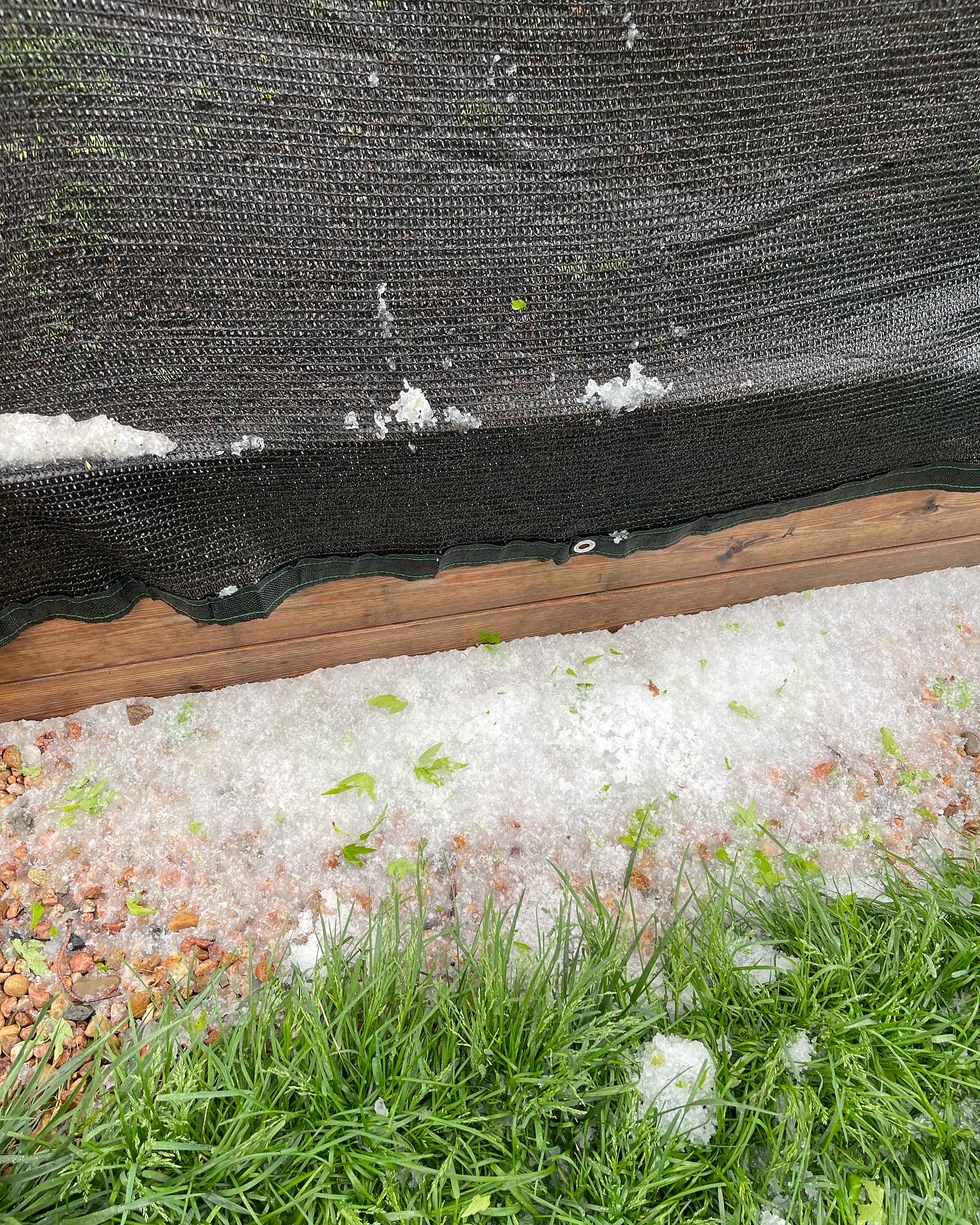
The above pictures are all from the last few weeks in my garden. You can see I have used shade cloth and even chairs to help protect the garden beds.
This season has been so different to any other growing season we have had in at least the last ten years, if not longer. We are used to having a chance of hail when the temperatures are high then an afternoon thunderstorm comes in. What we aren’t used to is the seemingly constant rainfall and storms producing more hail this season than years past. My peppers are not happy with the cooler temperatures we had all spring, but the meadow garden flowers are huge and have loved the rain. I am very thankful that I grow my food and herbs in raised beds and containers that have good drainage so I don’t have to worry too much about that. After one storm, that came with hail, we headed outside to check on everything and we’re greeted with ankle deep water in our grass! This would have been really bad news if I still had my in ground beds! It really has been an unusual season of precipitation, including hail, not to mention the outrageous winds. Today I want to share options for what to do before and after a devastating storm.
Before
- Watch – Watch weather updates and be prepared to take action. Gardeners, homesteaders and farmers need to always have a watchful eye on the weather. Turn on notifications for your local area.
- Move – Move any small containers to a sheltered place like a shed, garage or greenhouse.
- Cover – Cover raised beds with shade cloth, bug netting, frost cloth or even sheets and tarps if necessary. (For raised beds I use electrical pipe as hoops to drape my coverings over and clip the fabric with plastic clips that fit the pipe.) Any large containers or grow bags that can not be moved should also be covered, use the above covers mentioned, overturned buckets, empty pots, anything that can fit over the container and plants without smooshing them. I have used chairs and small tables too, really anything that can protect your plans without damaging them works!
After
- Go Outside – Once the weather has calmed and it is safe to go outside, assess the damage.
- Remove Part 1 – Remove any covers, buckets, etc. if the storm is truly over and another one is not in the pipeline.
- Assess – Assess the damage for every garden bed, container, etc. Make a list of lost plants.
- Remove Part 2 – After taking stock of what is doing well, what can bounce back and what won’t, remove any plants that have no hope of bouncing back.
- Rest – Allow any damaged plants to rest for a day or two without disturbance.
- Feed – Foliar feed damaged plants with a gentle plant food like kelp, to give them a little boost of nutrients. (Always follow package directions.)
- Replace – Replace any plants that were lost in the storm. (I suggest starting extra transplants that do not get planted out and are reserved as just in case plants of those things you would be sad about if you lost them in a storm or for any other reason.) You can keep these in larger pots and feed regularly so they grow well. You can also purchase starts if needed.
- Sow – Depending on how late in the season it is, sow more seeds of quick growing vegetables like beans, beets, possibly squash, etc. Think about your succession planting schedule and work from there. (If it is really late in the season for warm season crops, look to replacing open spots in the garden with fall vegetables instead.)
Damaging storms can happen any time through the growing season, being prepared helps to minimize the damage. At the very least you will know you did your best to help you garden. Watching the weather and having an action plan in place can mean the difference between having a successful garden or losing all the hard work put into growing the garden before the storm hit. Stocking up on covers and having them easily accessible ensures that you can cover plants when needed. Remember that a sheet or tarp can work in a pinch as well as overturned buckets and empty pots. Once the storm has passed, assessing the damage, making a plan to remove and replace lost plants as well as nurturing damaged plants will help your garden bounce back from a storm. Sowing new seeds or adding transplants in open spots give you an opportunity to grow something else. If you know you would be so sad to see a certain plant lost, start an extra plant or two to grow as just in case plants in larger pots. You can always give these plants to family, friends or neighbors if you end up not needing them. Storms happen, it’s nature, we have to roll with it. Being prepared before and after helps make the storm seem not as bad as it could have been. When a damaging storm does come, take a deep breath and know that there is always an option to grow more plants.
Please share what you do to prepare for a storm and what you do afterwards. Sharing can help others in the community try something new to them! ⬇️
 Candice Cullen Holistic Nutritionist, Herbalist, Culinary Nutrition Expert & Garden Coach