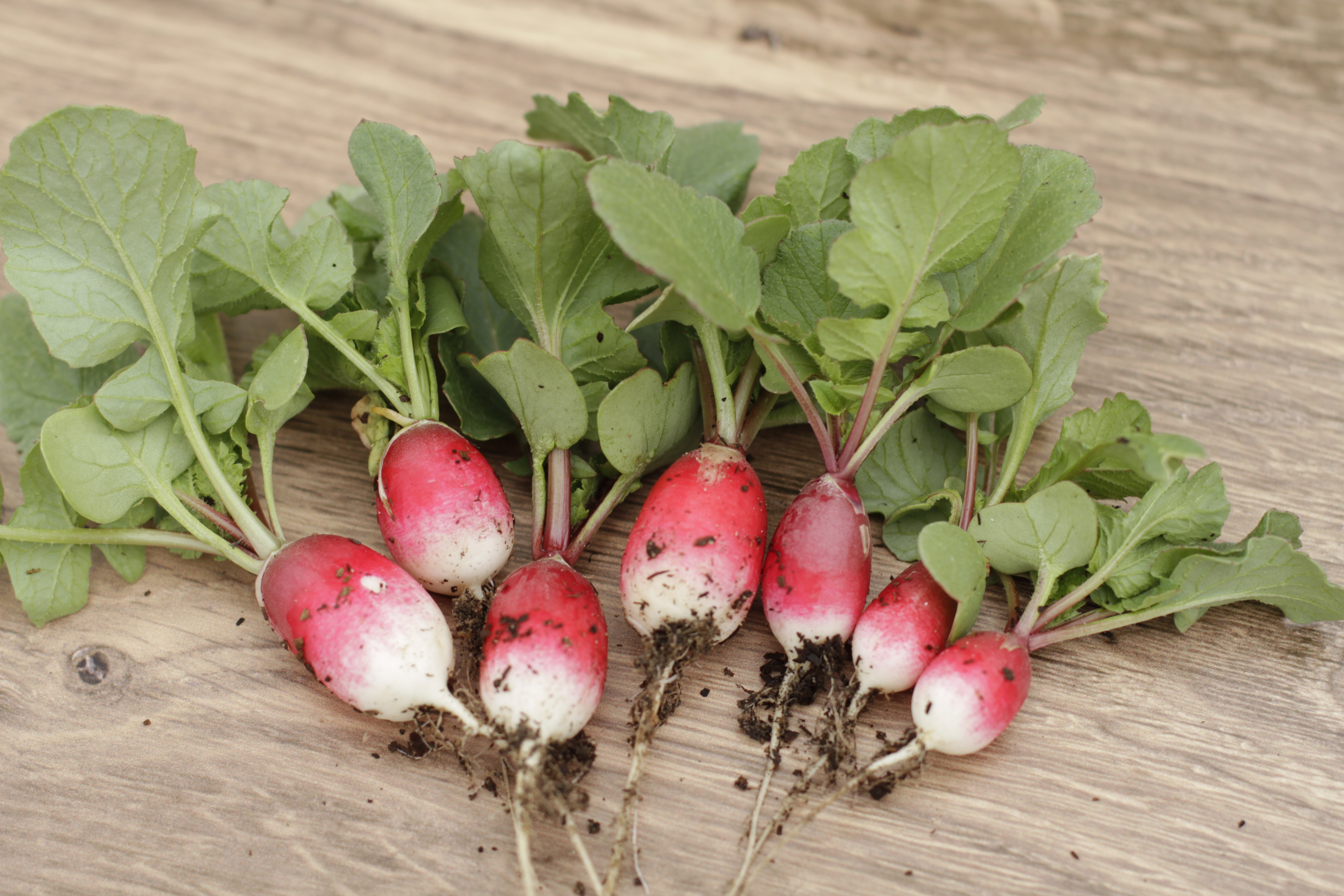
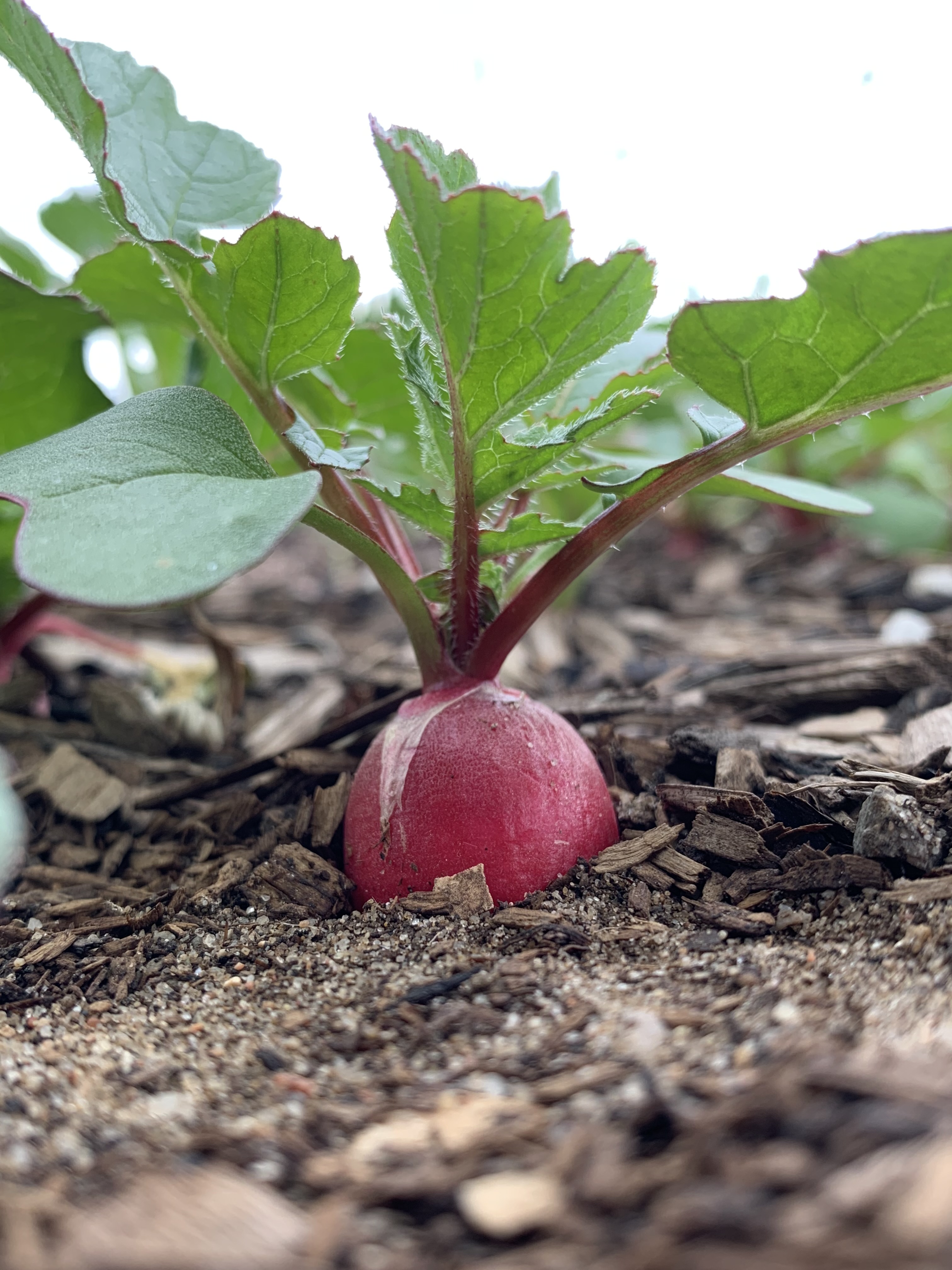

Radishes are quick growing cool season veggies that can be used in a variety of meals with a good nutritional profile. Here is some useful information about radishes to inspire you:
- Their scientific name is Raphanus sativus.
- They belong to the Brassicaceae family.
- They can bolt quickly when temperatures rise, so make sure to harvest in time before temperatures rise too much!
- Radishes are technically biennial plants, but grown as an annuals.
- Their leaves can be 6-8 inches tall while also spanning about 6 inches wide.
- Plant spacing guidelines for radishes are 16 per square foot or about 3 – 4 inches apart. (Some people go as little as 2 inches apart.)
- Planting seed depth is ½”.
- You can sow seeds for rashes 4-6 before your last frost date and succession sow until temperatures rise in late spring/early summer.
- In Autumn sow seeds approximately 7 weeks before your first frost.
- Radishes can be companion plants to beans, beets, carrots, lettuce, nasturtiums, peas and more!
- They can be grown in containers, raised beds, in-ground beds in loose soil. (They also prefer moist soil.)
- Once harvested (approximately 21-35 days after sowing), wash, dry and cut greens off, store in fridge in a glass container.
- You can use the greens in stir-fries, etc, much like spinach or chard.
- Once ready to prepare for a meal, cut off the tops and little root bottoms, you can compost these.
- Raw radishes can be used in salads, sandwiches, as crudités with dip.
- They are great for pickling.
- Cooked radishes can be added to soups, stews, stir-fries, etc.
- Radishes are a good source of Vitamin C, calcium, potassium and iron.
- Being a cruciferous vegetable, they also contain anti-cancer compounds.
- They have natural anti-fungal properties.
- A ½ cup of radishes gives you 1 gram of fiber.
With their quick days to maturity and nutritional profile radishes are a great vegetable to add to any garden in the cool season. Since they are small and take up little room in a garden bed or container, you can grow quite a lot in a small space. I hope the above information inspires you to grow radishes in your kitchen garden! If you have any questions about growing or cooking radishes, let me know. Ask in the comments or send me a message in Instagram, I would be happy to help!
 Candice Cullen Holistic Nutritionist, Herbalist, Culinary Nutrition Expert & Garden Coach